
Recent Posts
Alper Bozkurt and Team Win $4.3M Grant
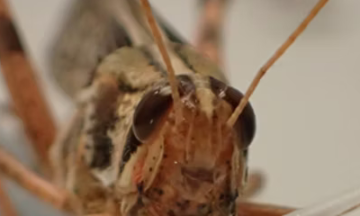
A multidisciplinary team led by researchers at the McKelvey School of Engineering at Washington University in St. Louis (WashU) has received a $4.3 million grant from the National Science Foundation’s Integrative Strategies for Understanding Neural and Cognitive Systems (NCS) program. NC State ECE Distinguished Professor and ASSIST Center Co-Director Alper Bozkurt is part of the team, and Baranidharan Raman, professor of biomedical engineering at the McKelvey School of Engineering, is leading the study.
Alper Bozkurt Receives NSF Rules of Life Funding for Mussels Research
The U.S. National Science Foundation has announced funding for Alper Bozkurt’s mussels research under the Using the Rules of Life to Address Societal Challenges program.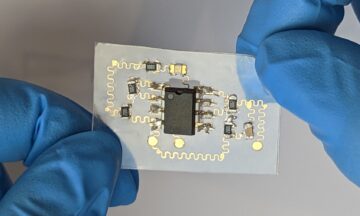
Reflections on Ten Years of ASSIST
Ten years ago, the ASSIST team set out to create disruptive, always-on wearable devices that would enable continuous monitoring for chronic disease management. We achieved this through unique co-engineering of energy harvesting, low-power systems-on-chip, low-power sensing and integration on flexible platforms such as textiles. ASSIST built these systems to meet the requirements of several key chronic health concerns such as asthma, cardiac disease, diabetes, and wound monitoring.
Edgar Lobaton Receives the 2023 William F. Lane Outstanding Teaching Award
Edgar Lobaton, associate professor in the Department of Electrical and Computer Engineering, has received the 2023 William F. Lane Outstanding Teaching Award This article was...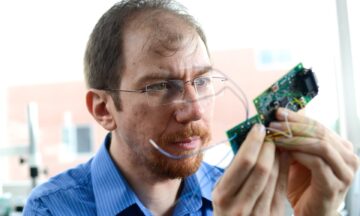
ASSIST Deputy Director Alper Bozkurt Receives 2023 Outstanding Global Engagement Award
On April 19, NC State Global hosted its annual Global Engagement Exposition to celebrate finalists and recipients of the Outstanding Global Engagement Award, Jackson Rigney Service Award and Distinguished Global Alumni Award.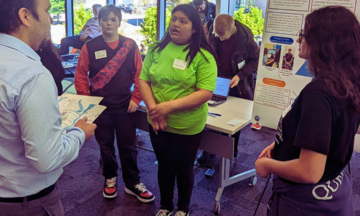
NC middle and high schoolers demonstrate the future of ASSISTive technology
The annual Wearable Device Challenge is in its eighth year at NC State, with one year off for the pandemic in 2020. Put on by the ASSIST Center, students are tasked with developing wearable health monitoring devices for humans or animals.
Researchers Help AI Express Uncertainty to Improve Health Monitoring Tech
A team of engineering and health researchers has developed a tool that improves the ability of electronic devices to detect when a human patient is coughing, which has applications in health monitoring. The new tool relies on an advanced artificial intelligence (AI) algorithm that helps the AI better identify uncertainty when faced with unexpected data in real-world situations.